
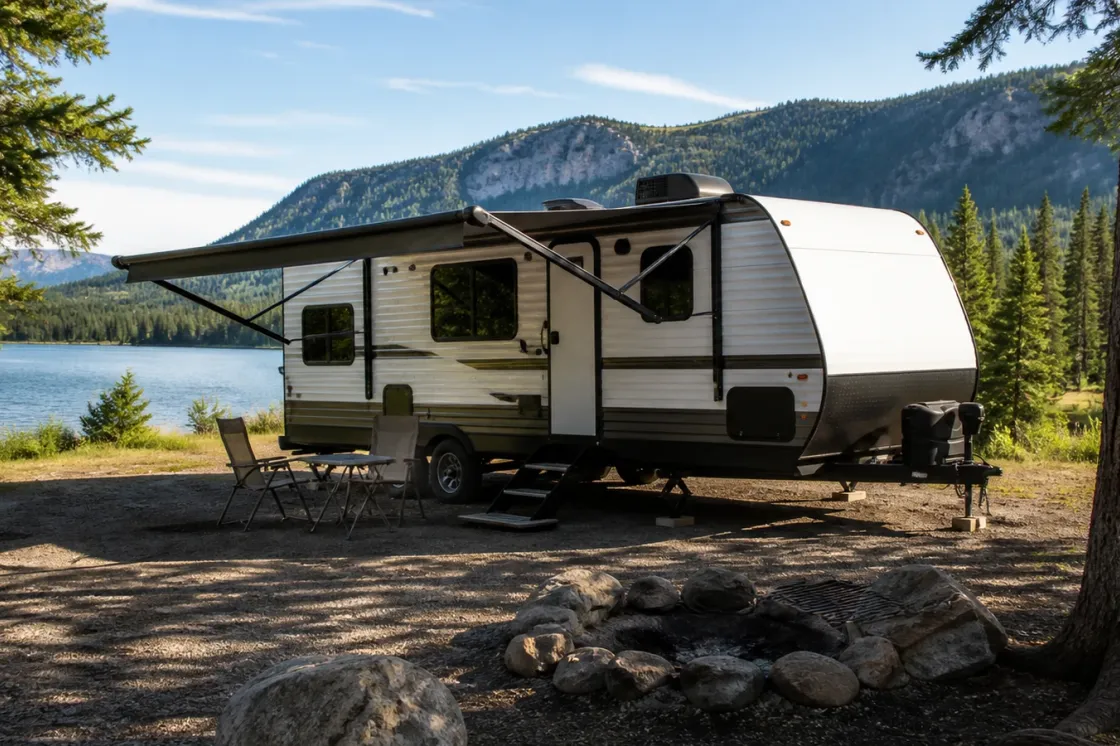
Financing a travel trailer lets you spread the cost of a recreational vehicle across regular, manageable payments instead of paying the entire purchase price upfront. For buyers seeking RV financing in Canada, the process follows a clear structure similar to an automotive loan, with practical considerations around trailer weight, seasonal ownership, and your tow vehicle.
When you understand how lenders review a trailer loan request and what paperwork you need at the desk, you can shop with confidence and secure terms that fit your household budget.
How travel trailer financing works
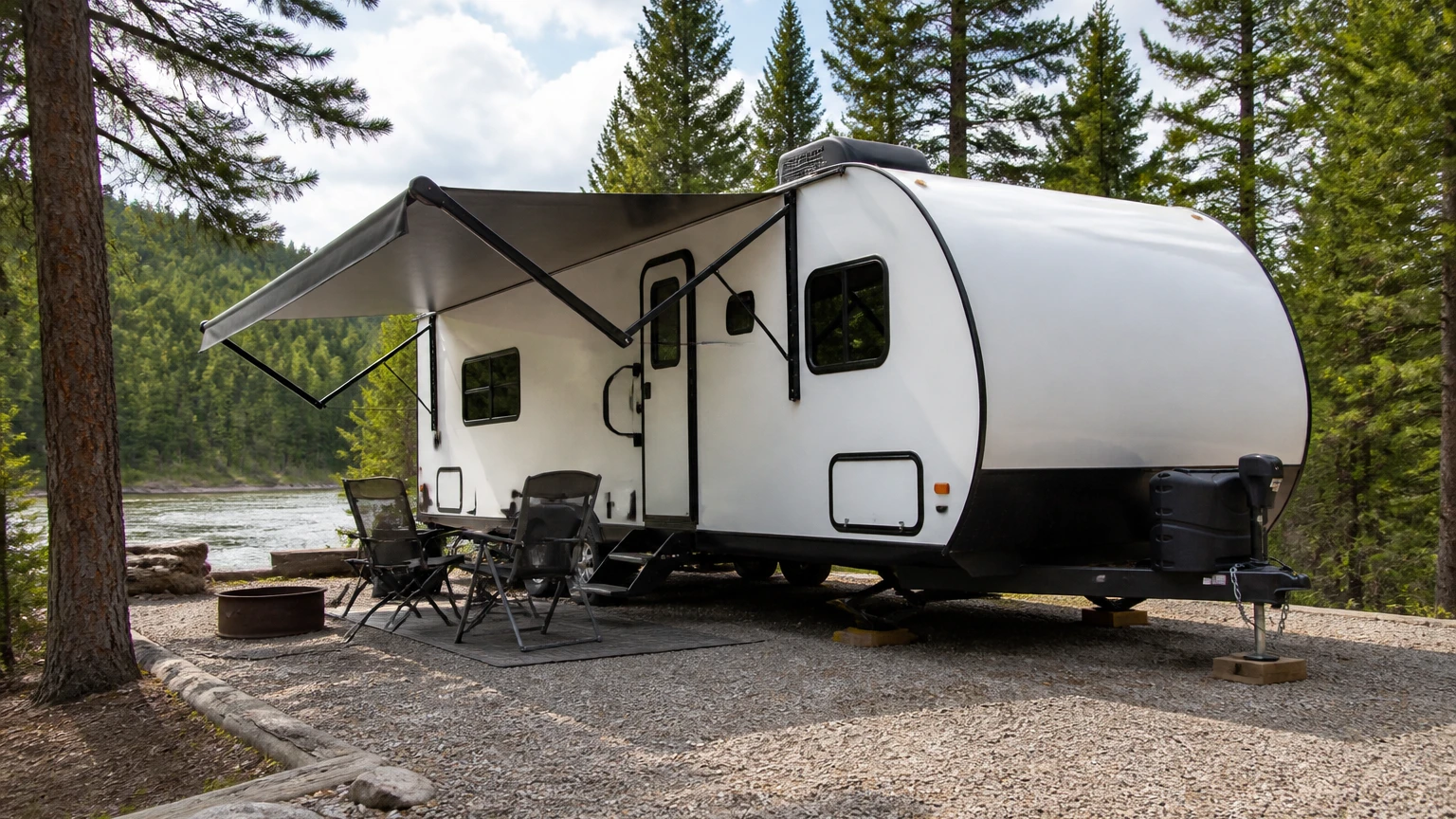
Recreational vehicle lending across Canada connects buyers with major financial institutions and specialized marine and RV lenders through retail dealership networks. If you are shopping for RV financing in Alberta or across Western Canada, options can be tailored to the exact unit you choose, whether that is a lightweight teardrop, a couples coach, or a large family bunkhouse.
At Ride Motor Company, our active RV inventory focuses entirely on towable travel trailers and cargo units, while motorhome financing is an adjacent category for buyers seeking motorized coaches that we do not currently list.
A secured loan on the trailer itself
When you finance a travel trailer, the transaction is structured as a secured loan, a loan backed by the trailer as collateral. Because the lender holds a legal claim on the unit until the contract is finished, secured loans generally offer lower interest rates and longer repayment timelines than unsecured personal lines of credit.
The lender calculates your regular payments based on the amount financed, the total balance you borrow. Your contract will specify regular monthly or bi-weekly installments that cover both the borrowed balance and the accrued interest over time.
New versus used units and how age affects the request
Both new and pre-owned travel trailers can be financed, but unit age plays an important role in how lenders evaluate the file.
New travel trailers often qualify for extended repayment schedules because their initial market value is clear and factory warranties protect against major mechanical defects. Used travel trailers also offer strong financing opportunities, though lenders may set shorter maximum loan lengths based on the model year and overall condition of the unit. When looking at pre-owned units, reviewing inspection reports and maintenance history helps confirm that the asking price aligns with fair market standards.
What a lender reviews for a trailer loan
Lenders evaluate recreational vehicle loan requests by assessing applicant credit history, monthly income stability, and the specific value of the trailer being purchased.
To see how specialized credit programs operate across other powersports categories, you can review our guide on how recreation vehicle financing works for additional context on credit tiers and desk reviews.
Credit bureau basics, income, and monthly debts
When your application is submitted, the finance team requests your credit file from a credit bureau, the reporting agency that tracks your credit history. Lenders look closely at your past payment consistency across auto loans, mortgages, credit cards, and existing installment contracts.
In Canada, lenders place significant weight on your beacon score, the credit rating calculated by Equifax, to gauge repayment reliability. A higher score typically unlocks competitive interest rates and flexible loan structures. If your credit score is rebuilding, specialized lenders can often approve financing by focusing on your current employment stability and debt management rather than past credit challenges.
Lenders also calculate your debt service capacity by comparing your total monthly earnings against mandatory expenses like housing, current vehicle loans, and credit card balances. Having steady, verifiable income with room in your monthly budget gives lenders confidence that you can handle regular trailer payments throughout the year.
The unit price and your down payment
The relationship between the trailer price and the money you invest upfront directly influences lender terms. Providing an upfront down payment creates immediate ownership equity and reduces the total amount borrowed.
Putting cash down can also lower your monthly payments, shorten the time needed to pay off the unit, and improve your approval terms with prime lending institutions. While zero-down financing programs exist for qualified applicants on approved credit, contributing a modest down payment helps protect you against depreciation and strengthens your overall application.
Your tow vehicle matters too
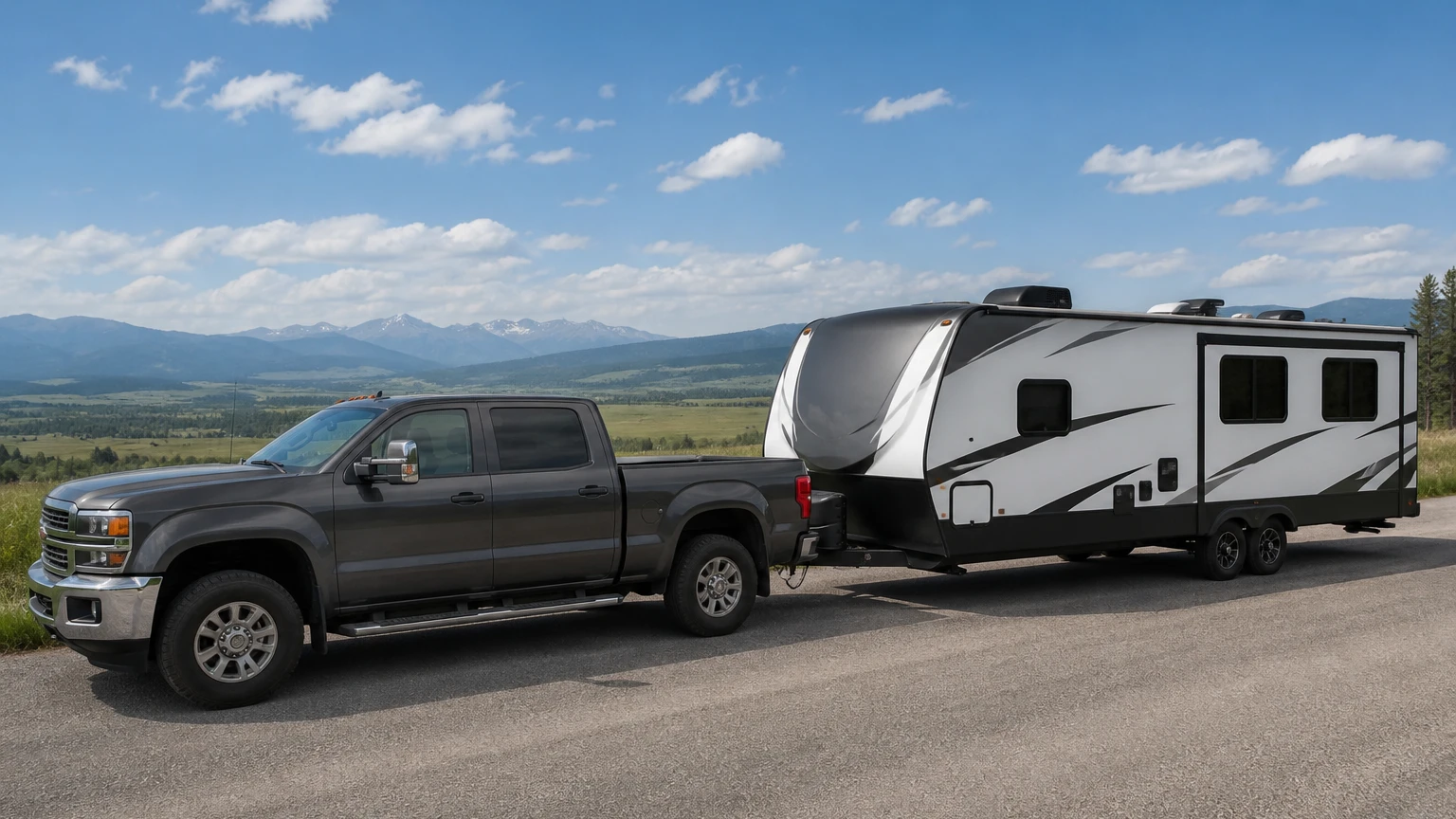
While a trailer loan is secured solely by the recreational unit, your tow vehicle is a crucial part of the practical purchasing process. Lenders want to know you are buying a unit you can safely operate, and establishing towing compatibility prevents costly mistakes before you take delivery.
Confirm the trailer weight your truck can pull
Before falling in love with a specific floor plan, verify your vehicle's tow rating, the maximum weight your vehicle may pull. Your truck's exact pulling limit depends on its engine, rear axle ratio, and factory towing package, which you should confirm in your owner's manual and the manufacturer's towing guide rather than relying on general estimates.
To confirm your truck's carrying limits, check the labels inside your driver-side door jamb. The Tire and Loading Information label shows your maximum payload, which is the total weight your truck can carry. Passengers, cab gear, cargo in the truck bed, and the downward tongue weight of your hitched trailer all count against this payload limit. The safety compliance label on the door jamb shows the maximum allowable weight of your fully loaded truck.
You also need to check the trailer's own weight specifications on its manufacturer certification label. Focus on the trailer's maximum loaded weight rating, which includes full water tanks, filled propane cylinders, food, and camping cargo. Never rely solely on an unloaded dry weight figure, as a packed travel trailer always weighs significantly more once prepared for a weekend trip.
Matching your truck's verified limits with the fully loaded trailer weight keeps your setup stable on highway passes and gravel roads across Western Canada.
Hitch and weight-distribution questions to ask before signing
Setting up your connection hardware correctly is just as important as matching weight ratings. For mid-size and larger travel trailers, you will often need a weight-distribution hitch, a hitch that spreads tongue weight evenly.
Ask your sales and service advisors whether your trailer requires an integrated sway control system, what class of hitch receiver is installed on your truck, and whether a trailer brake controller needs to be wired into your vehicle cab before driving off the lot.
Trailer types and how they shape the loan
Travel trailers come in various configurations, sizes, and price points, each offering distinct advantages for different camping styles and financing budgets.
Bunkhouse, couples, and lightweight floor plans
Family bunkhouse models provide dedicated sleeping quarters for children and guests, making them popular for extended summer road trips. Couples coaches prioritize spacious living areas, theatre seating, and larger master suites for weekend getaways. When exploring RV trailer financing, lightweight single-axle units offer compact floor plans that can be towed by many mid-size SUVs and light-duty pickups, keeping both initial purchase costs and fuel expenses manageable.
You can browse live inventory to explore available floor plans, weights, and pricing across our current lineup of travel trailers.
Cargo and equipment trailers as a different conversation
Enclosed cargo trailers and flatdeck equipment haulers serve distinct utility, commercial, or powersports transport needs. While cargo trailers are also towable units, commercial use or business financing files may involve different tax treatments, depreciation considerations, and commercial lending guidelines compared to recreational travel trailers.
Documents to bring for a travel trailer financing enquiry
Arriving at the dealership with organized paperwork ensures a smooth financing review and prevents unnecessary processing delays. Submitting complete stips, short for lender document requirements, allows the finance department to present a clear file to the lender.
Before starting your application, gather the following essential documents:
- Government-issued photo ID: A valid Canadian driver licence or passport to verify your identity and address.
- Proof of income: Recent pay stubs, employment letters, or recent Notices of Assessment for self-employed applicants.
- Banking details: A void cheque or pre-authorized debit form to set up automatic payment withdrawals.
- Current residence details: Mortgage statements or rental agreements confirming your housing costs.
- Target unit information: The stock number, model year, specifications, and bill of sale details for the trailer you wish to purchase.
Your next step with Ride Motor Company
Getting pre-approved or exploring trailer financing options is simple when working with an experienced finance team.
To explore current payment options and begin your file, you can start a financing conversation through our secure online application. Our finance specialists review your goals, compare programs across multiple lending institutions, and help structure a repayment plan tailored to your lifestyle.
Once your financing is arranged, you can confirm the unit location across our Edmonton and Leduc dealership lots to walk through the trailer, inspect its features in person, and schedule your final handover.
Questions about financing a travel trailer
Learn more about the practical details of financing a travel trailer in Canada with the common questions and answers below.
| Item | Question to ask | Why it changes the decision |
|---|---|---|
| Unit sale price | What is the total agreed price before taxes and dealer fees? | Sets the base purchase amount before financing calculations begin. |
| Down payment | How much cash or trade equity are you putting toward the purchase? | Lowers the borrowed balance and can reduce monthly carrying costs. |
| Amount financed | What is the final balance borrowed after adding taxes, fees, and subtracting down payment? | Represents the borrowed balance that interest is charged on over the term. |
| Interest rate and APR | Is the interest rate fixed, and what is the full annual percentage rate? | Determines the ongoing borrowing cost across the repayment schedule. |
| Repayment term | How many months does the loan run, and what is the payment frequency? | Balances a comfortable monthly payment against total interest charges. |
| Total repayable | What is the sum of all scheduled payments over the full contract life? | Shows the complete financial commitment if held to maturity. |
| Lender fees | Are there any mandatory origination, administration, or registration fees? | Identifies upfront or capitalized charges included in the loan agreement. |
| Optional protection products | Are extended service agreements, gap coverage, or warranty options included? | Allows you to decide which optional coverages provide value for your budget. |
| Early repayment terms | Is the contract fully open for extra payments or early payout without penalties? | Gives you the flexibility to pay down the balance faster whenever you choose. |
| Requirement | Purpose | What to prepare |
|---|---|---|
| Photo identification | Confirms identity and provincial age of majority | Valid Canadian driver licence or current passport |
| Proof of income | Demonstrates steady cash flow to support payments | Recent employment pay stubs, T4 slips, or Notice of Assessment |
| Banking information | Establishes pre-authorized payment withdrawals | Void cheque or direct deposit form from your financial institution |
| Housing and budget details | Shows regular monthly living expenses and housing obligations | Monthly rent or mortgage amount and ongoing loan balances |
| Trailer listing details | Provides the specific unit value and technical specs for the loan file | Model year, make, floor plan, VIN, and advertised sale price |
| Tow vehicle specifications | Verifies that your personal setup matches the trailer safely | Vehicle model, door-jamb payload rating, and maximum towing capacity |
Live inventory
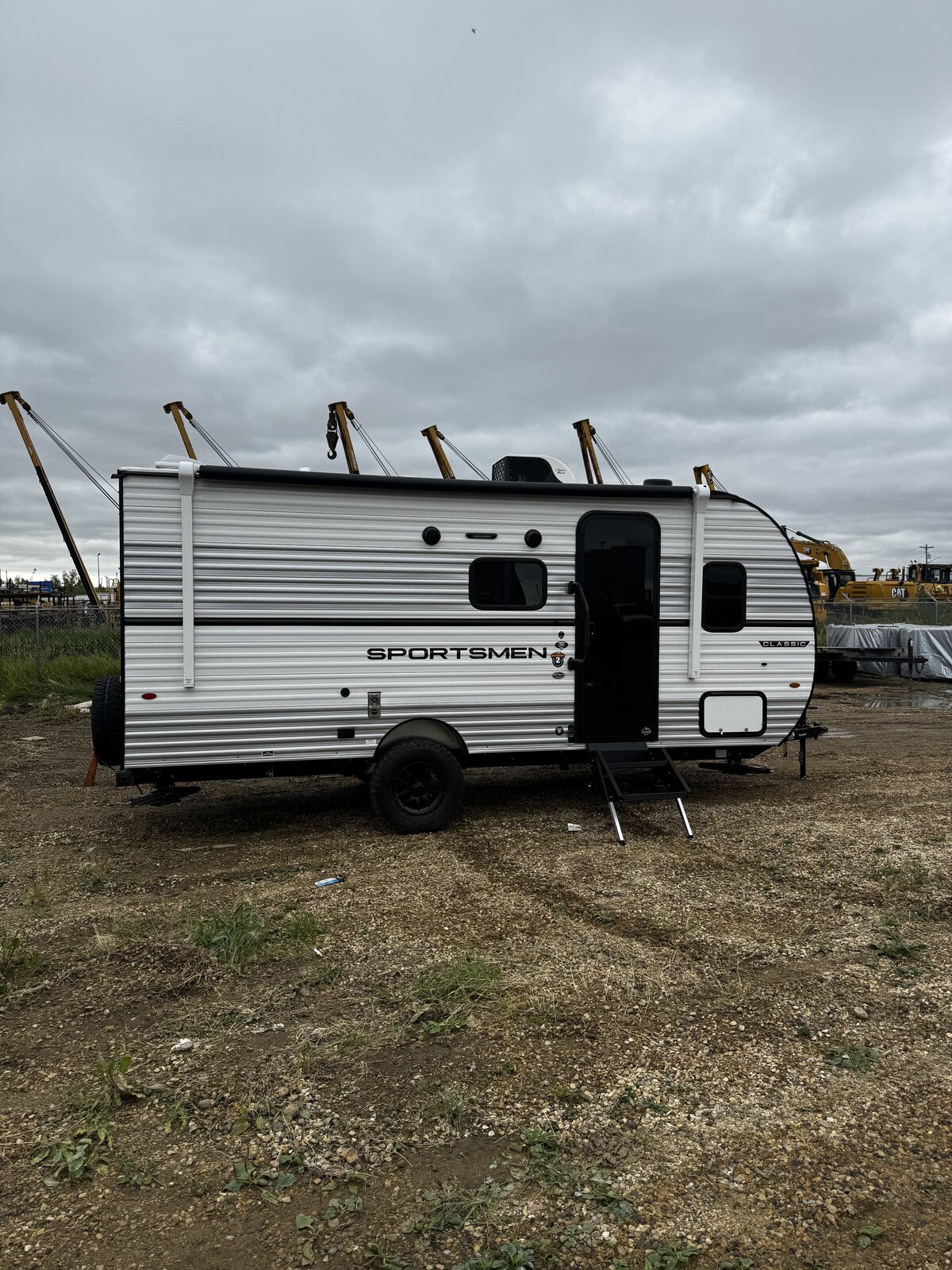
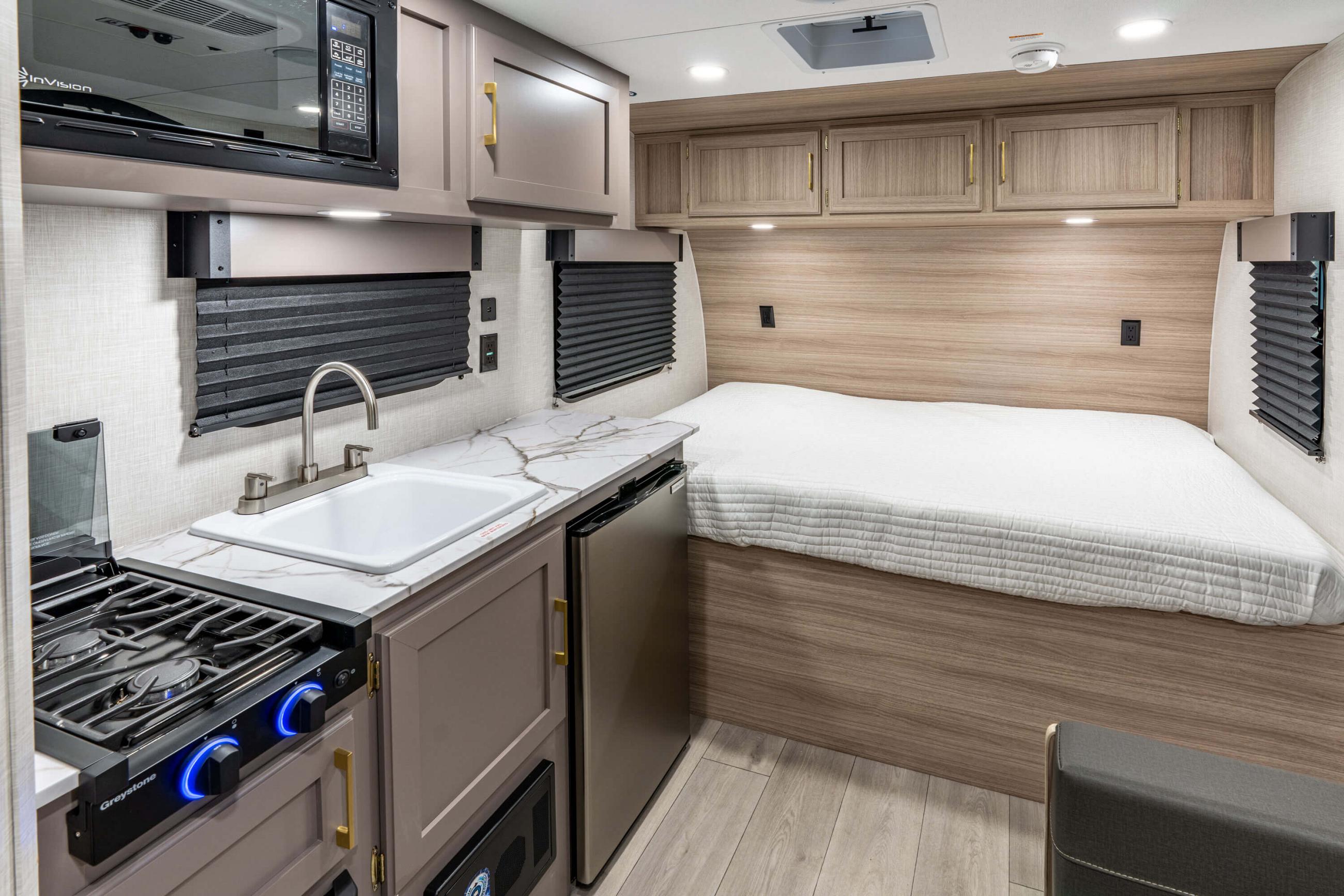
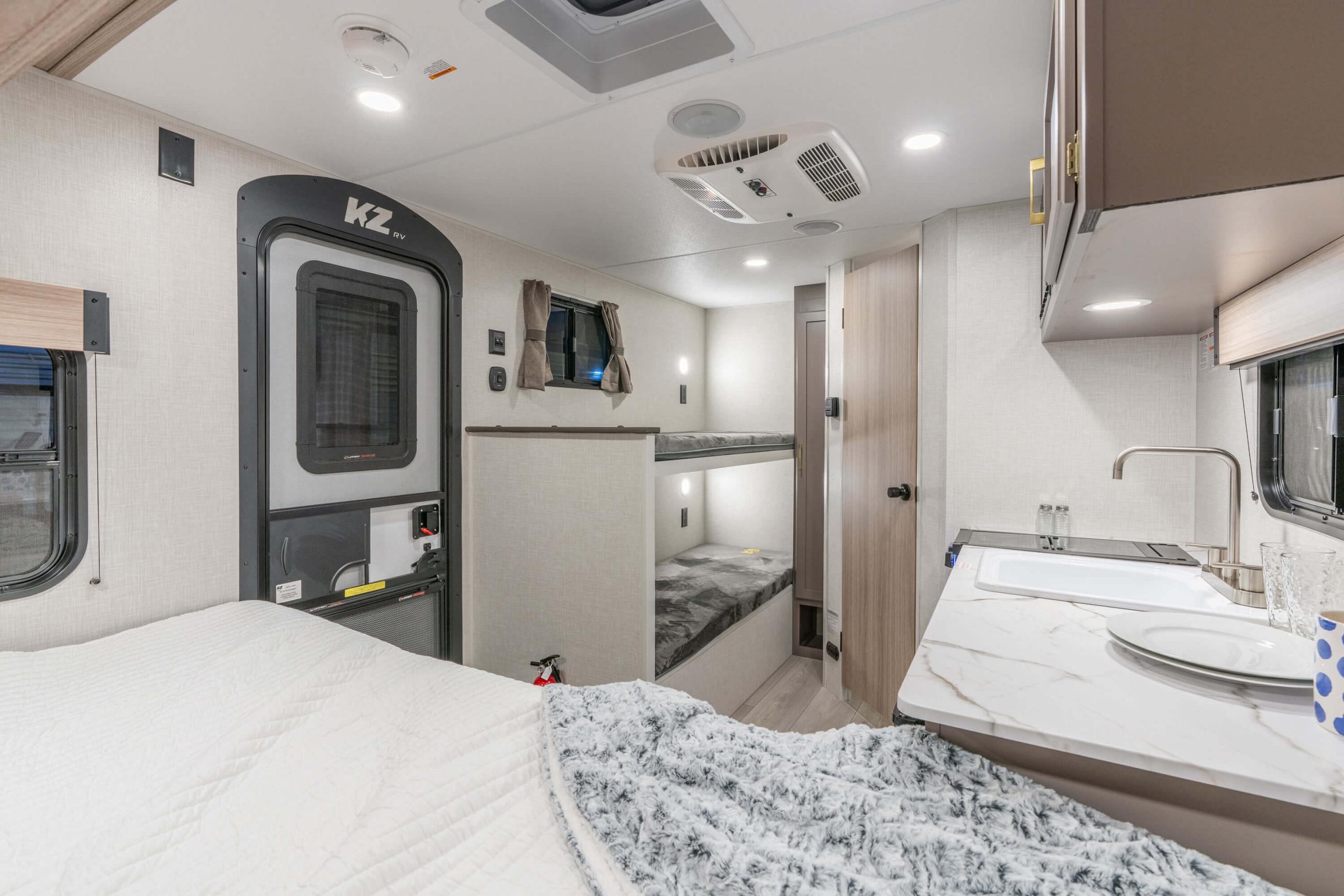
Travel trailers and RVs on the lot right now
Live RMC inventory pulled directly from the dealership lot feed. Stock updates as units arrive and sell, so verify current availability before planning your visit.
Take the next step
Put this guide to work by comparing inventory or reviewing your financing options.
Straight answers
Frequently asked questions
Can I finance a travel trailer in Canada?
Yes, travel trailer financing is available across Canada through major charter banks and dedicated recreation lenders. Approval terms, interest rates, and available repayment lengths depend on your credit profile, verifiable income, down payment, and the age and value of the trailer.
Do lenders look at my truck when I finance a trailer?
Lenders write the loan against the travel trailer itself rather than your truck. However, confirming your tow vehicle has adequate towing capacity and payload rating is an essential step you should verify before completing your purchase.
Can I finance a used travel trailer?
Yes, used travel trailers can be financed through retail dealership lender networks. Lenders review the model year, overall condition, and market value of the used trailer when establishing approved loan amounts and repayment terms.
What should I bring before asking about payments?
Have your government-issued photo identification, recent proof of income such as pay stubs or tax notices, basic banking details for automated payments, and the specific listing information for the trailer you want to buy.
Useful links
Plan your next step
Keep reading
Related resources
financing
ATV Financing in Alberta: How the Payment Path Works
How ATV financing really works at a dealership desk in Alberta, what documents to bring, how used units affect approval, and honest credit talk.
financing
ATV Financing Alberta: Edmonton and Leduc Desk Path
Looking at ATV financing in Alberta? See how an Edmonton or Leduc desk reviews a file, what to bring, used-unit notes, and how to move to live inventory.
financing
ATV Loan Canada: What Buyers Should Sort Before They Buy
Looking at an ATV loan in Canada? See how the desk reads the file, what docs matter, and how Ride Motor Company starts a real payment check.
financing
Canadian Powersports Financing: How Buyers Get Funded
See how ATV, side-by-side, and snowmobile financing works at a Canadian dealership desk, what to bring, and how one process covers every unit type.