
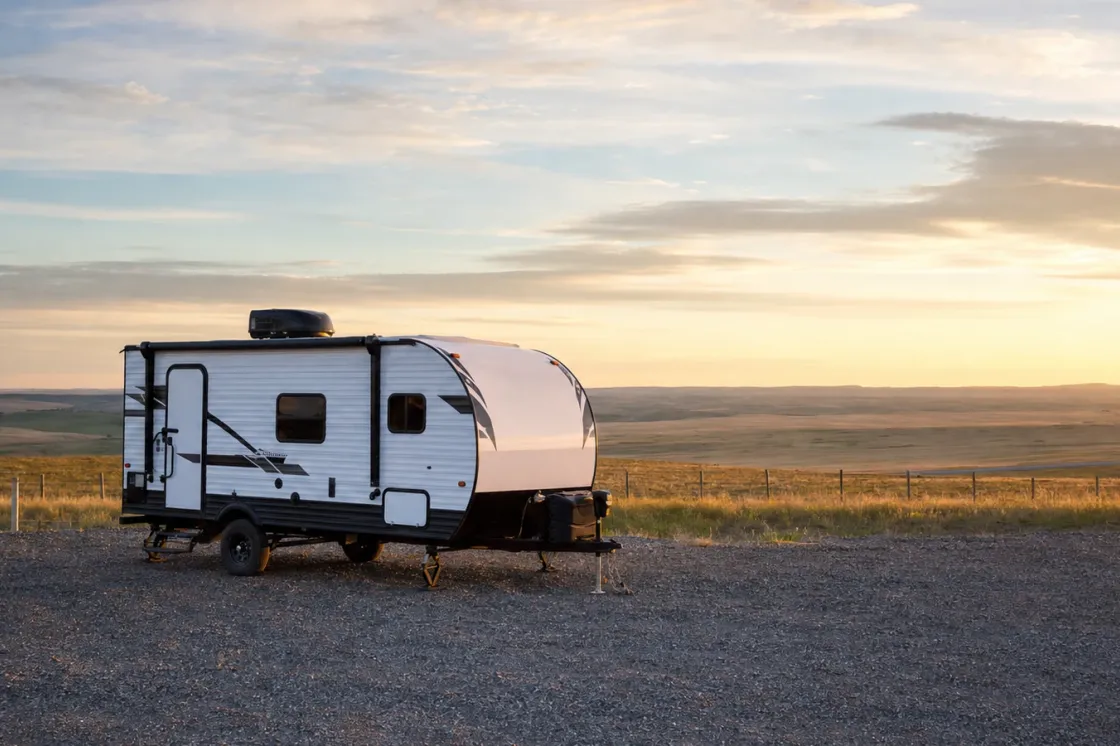
Looking into camper financing in Canada gives you a clear path to owning a camping trailer without paying the entire purchase price upfront. Whether you want a compact bunkhouse for weekend family getaways or a lightweight couple trailer for mountain road trips, setting up a predictable loan structure keeps your outdoor adventures affordable.
Recreation vehicle lending sits within the broader world of rv financing canada, but financing a camper has unique practical considerations. Lenders look closely at the unit age, its market value, and your personal financial profile. At the same time, you need to ensure your vehicle is ready to pull the trailer safely. With no motorhomes currently listed, this guide covers towable campers. Motorhome questions can go straight to the finance desk.
Understanding how a camper loan works before visiting the dealership helps you shop with confidence. You can narrow your choices to units that fit both your budget and your vehicle capabilities.
Before the desk: what a camper loan actually is
A camper loan is a fixed installment loan designed specifically for towable recreation vehicles. When you set up camper trailer financing in Canada, the agreement is structured as a secured loan, which is a loan backed by the unit as collateral. Because the lender holds a legal claim on the title until the balance is paid, rates are typically lower than unsecured personal borrowing.
The amount financed is the balance you borrow after your down payment. Taxes and lender fees can be rolled into that balance if you finance them, while interest is the charge paid over time across your loan term. Loan term length depends on the price, model year, and lender program, and the finance desk shows the exact term options for the unit you pick. Many contracts allow extra payments or early payout, but prepayment terms vary by lender, so confirm with the finance desk whether any fees apply before signing.
Before heading into a dealership, you can browse live camper and RV inventory to compare different floor plans, prices, and specifications.
What lenders review on a camper file
When a dealership finance team submits your application, lenders evaluate several key factors to determine your approval terms and interest rate.
During the review, lenders pull your file through a credit bureau, which is the agency that tracks your credit history. They pay close attention to your beacon score, which is the credit rating score calculated by Equifax. A steady repayment history with existing vehicle loans, credit cards, or a mortgage demonstrates that you can manage regular monthly installments.
Lenders also compare your total monthly debt payments against your household income. They look for stable employment income through recent pay stubs, direct deposit records, or tax assessments.
Beyond your financial profile, your tow vehicle readiness is an essential consideration for safe ownership. While lenders lend against the trailer itself, you must ensure your truck or SUV has sufficient capacity. Before finalizing your purchase, you should always check your truck tow rating, meaning the maximum weight your vehicle can pull. You also need to confirm how much total weight your truck can carry so the hitch load of the loaded camper, plus passengers and cargo, stays within the truck's limit.
For a broader look at how recreation lenders evaluate specialty vehicle files across Canada, explore our recreation vehicle financing guide.
New vs used campers: how the lender reads the unit
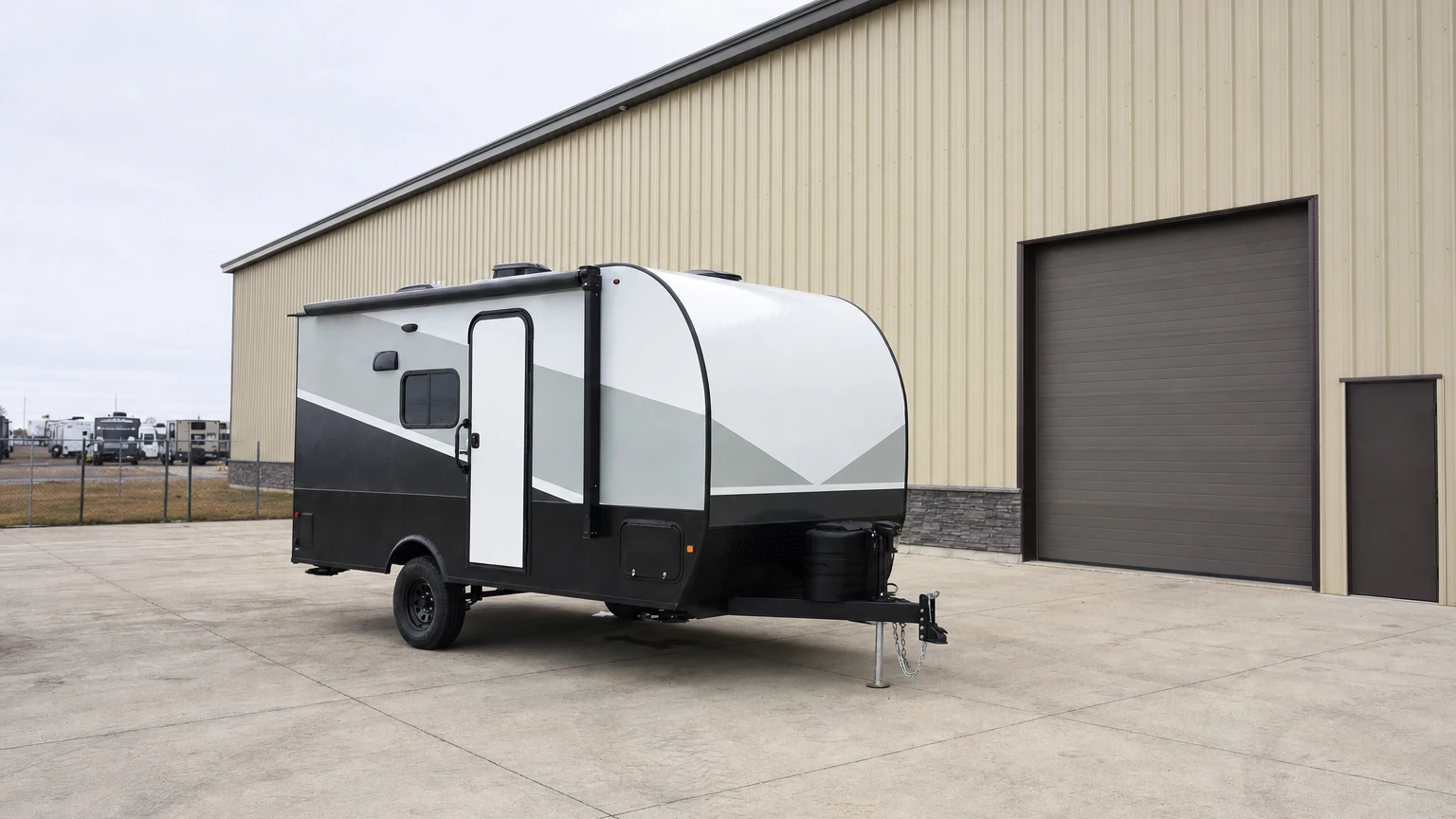
Lenders evaluate new and used units differently when setting loan limits and terms. Both options offer great ways to enjoy camping, but their financial structures differ.
New campers come directly from manufacturers with clear invoice pricing and factory warranty protection. Lenders see minimal valuation risk on brand new units, which allows them to offer longer loan terms and competitive interest rates. A longer term helps lower your monthly payment on a higher purchase price.
Used campers offer lower purchase prices, which reduces the total balance you need to borrow. When evaluating camping trailer financing on a used unit, lenders look up market valuation guides and inspect condition details to establish the maximum loan amount. Older units may have shorter maximum loan terms, but the lower initial balance means you carry less total debt.
If you are evaluating larger towable options such as full-size bunkhouse models, take a look at our travel trailer financing guide to see how tow requirements and floor plans compare.
The documents to bring before you apply

Preparing your paperwork in advance makes the finance process smooth and straightforward. The finance desk will collect your stips, which is short for lender document requirements, before submitting your file to the lending network.
Having complete records ready prevents delays and helps the finance team secure clear terms quickly. You will need government-issued photo identification to verify your identity and confirm you have reached the age of majority in your province. A valid driver licence or passport works best.
You will also provide proof of income. Full-time employees can supply recent pay stubs showing year-to-date earnings. Self-employed buyers or seasonal workers can provide recent Notices of Assessment or business bank statements.
Finally, bring your banking information, such as a void cheque or pre-authorized debit form, to set up automated monthly withdrawals once approved. You can complete an online credit application from home to get the process started before visiting the showroom.
What happens at the finance desk
Once you select a camper and submit your application, the dealership finance specialist goes to work on your behalf. Rather than relying on a single bank, the finance desk works with a network of major Canadian chartered banks and specialized powersports lenders.
The specialist reviews your application, matches your file with lenders offering the best programs for your scenario, and submits the details with the exact unit specifications. If a lender requires additional verification, the specialist coordinates the documents to keep your approval moving forward.
When approvals return, the finance manager presents the available loan options clearly. You can review the exact interest rate, loan term, payment frequency, and total cost of borrowing before signing any paperwork.
The payment talk: rates, terms, and what changes them
Your final payment depends on the interaction between purchase price, down payment, interest rate, and term length.
Putting cash down or trading in an existing recreation vehicle lowers the loan balance, which reduces your monthly payment and saves on interest over time. Choosing bi-weekly payments instead of monthly payments can align better with your pay schedule.
Interest rates vary based on whether the camper is new or used, the loan length, and your overall credit standing. Shorter terms have higher monthly payments but lower total interest costs over the life of the loan. Longer terms keep your monthly cash flow flexible, allowing you to manage seasonal camping expenses comfortably.
After approval: paperwork, insurance, pickup
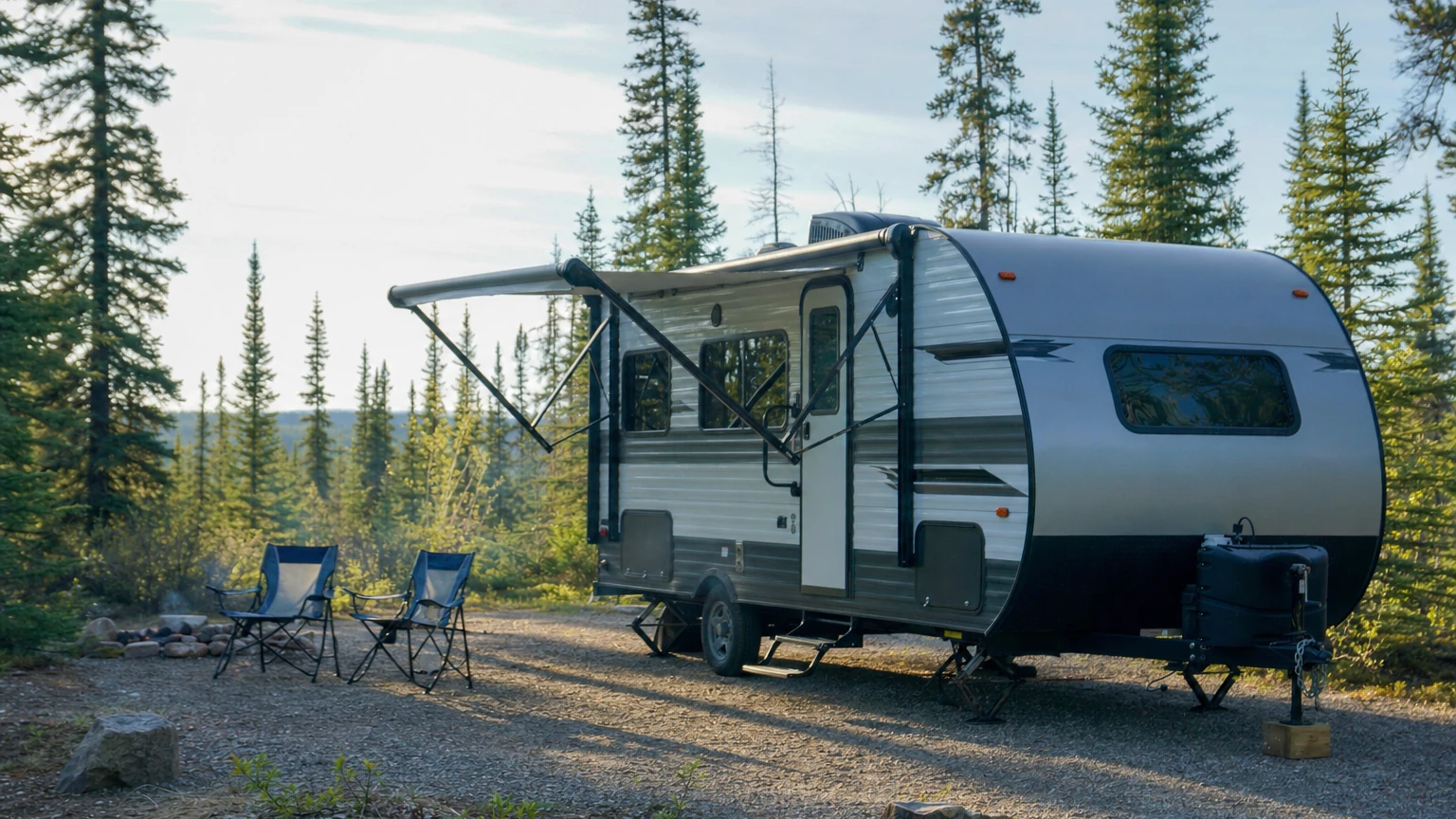
After selecting your preferred financing option, completing the final steps is simple and transparent.
First, you review and sign the formal loan contract and bill of sale. Take time to confirm all figures, including the purchase price, interest rate, term length, and payment dates.
Next, you will arrange insurance coverage for your camper. Most lenders require full physical damage coverage, including comprehensive and collision protection, before releasing loan funds. Your insurance broker will need the vehicle identification number (VIN), year, make, model, and purchase price to add the trailer to your policy.
Finally, the dealership completes a comprehensive pre-delivery inspection, checks all onboard systems, and schedules your pickup walkthrough. During handover, a technician shows you how to operate the hitch coupler, trailer brakes, leveling jacks, slide-outs, water systems, and electrical hookups so you can hit the road with complete peace of mind.
| Document | Why the lender wants it | What to prepare |
|---|---|---|
| Government photo ID | Confirms your identity and legal signing age | Valid Canadian driver licence or passport |
| Proof of income | Verifies you can cover the monthly payment | Recent pay stubs or notice of assessment |
| Banking details | Sets up your pre-authorized monthly withdrawals | Void cheque or direct deposit form from your bank |
| Living cost summary | Shows your regular monthly housing expenses | Rent amount or monthly mortgage payment |
| Selected unit listing | Ties the loan file to a specific camper | Stock number, model year, and price |
| Tow vehicle details | Confirms your truck can pull the camper safely | Vehicle make, model, and tow capacity |
| Factor | Used camper trailer | New camper trailer |
|---|---|---|
| Lender valuation | Lender reviews market book value and physical condition | Lender uses manufacturer invoice pricing |
| Available loan terms | Term length depends on the model year and unit age | Longer loan terms are often available |
| Upfront pricing | Lower total purchase price and lower initial loan balance | Higher purchase price with factory warranty coverage |
| Maintenance factor | Buyer plans for regular wear and inspection checks | Minimal initial wear with fresh factory components |
| Best fit | Buyers wanting lower loan balances and lower entry costs | Buyers wanting maximum term length and newer features |
Live inventory
Campers and RVs on the lot right now
Live RMC inventory pulled directly from the dealership feed. Stock updates as units arrive and sell, so verify current availability before planning your visit.

Take the next step
Put this guide to work by comparing inventory or reviewing your financing options.
Straight answers
Frequently asked questions
Can I finance a camper in Canada?
Yes. Camper financing is available across Canada through major banks and specialized recreation lenders. Approval terms, interest rates, and loan lengths depend on your credit history, verifiable income, down payment, and the age and value of the camper.
Do lenders inspect my tow vehicle when I finance a camper?
Lenders write the loan against the camper trailer rather than your vehicle. Even though the lender does not inspect your truck, matching your vehicle tow limit and carry capacity to the camper is an important step you should confirm before buying.
Can I finance a used camper trailer?
Yes. Dealership lender networks finance used campers every day. Lenders review the unit model year, overall condition, and market value when setting the approved loan amount and repayment schedule.
What documents do I need to finance a camper?
You will need government photo identification, proof of income such as recent pay stubs or tax notices, and banking information for monthly payments. Having these ready helps the finance desk review your file without delay.
Do I need a down payment for a camper loan?
Down payment requirements depend on your credit profile, the loan size, and lender guidelines. Putting money down reduces your total balance borrowed and can help lower your monthly payment.
Useful links
Plan your next step
Keep reading
Related resources
financing
ATV Financing in Alberta: How the Payment Path Works
How ATV financing really works at a dealership desk in Alberta, what documents to bring, how used units affect approval, and honest credit talk.
financing
ATV Financing Alberta: Edmonton and Leduc Desk Path
Looking at ATV financing in Alberta? See how an Edmonton or Leduc desk reviews a file, what to bring, used-unit notes, and how to move to live inventory.
financing
ATV Loan Canada: What Buyers Should Sort Before They Buy
Looking at an ATV loan in Canada? See how the desk reads the file, what docs matter, and how Ride Motor Company starts a real payment check.
financing
Canadian Powersports Financing: How Buyers Get Funded
See how ATV, side-by-side, and snowmobile financing works at a Canadian dealership desk, what to bring, and how one process covers every unit type.